
/Applications & Services
Healthcare & Emergency Response
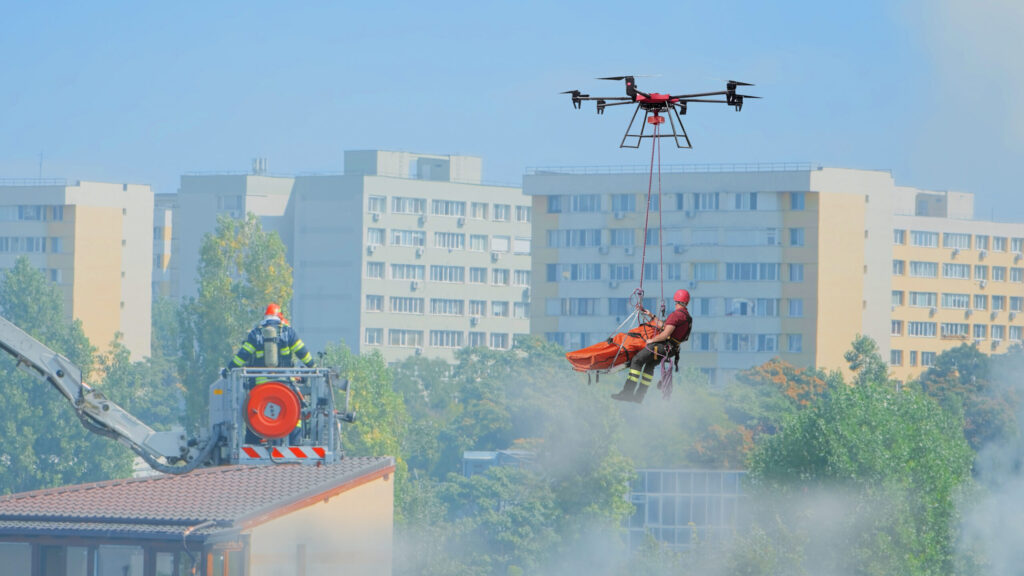
1. Search & Rescue Operations
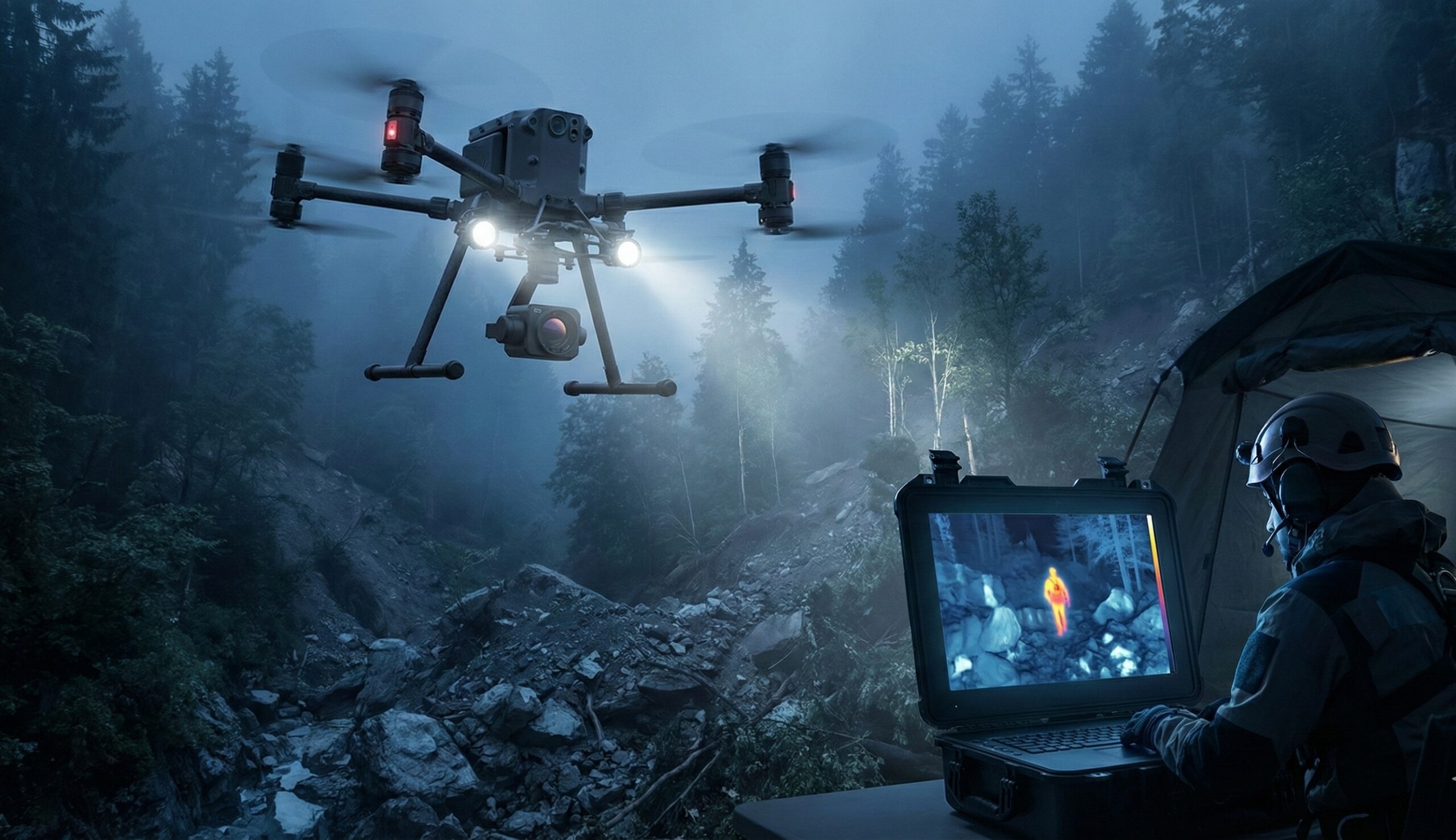
Rapid SAR grid mapping (wilderness/urban).
Night-time SAR high-intensity lighting.
Man Overboard (MOB) search with AI lifejacket detection.
Safety and Rescue system for mountainous areas.
Digital Twin-UAV- IoT in flood monitoring, search and rescue and emergency medical response.
Automated Flood Security Monitoring and Response Solution.
Generate detailed maps of disaster-affected areas (floods, earthquakes, fires) and the internal/external structures of burning or collapsed buildings.
Search for missing persons in forests, on mountains, after earthquakes, landslides, or inside collapsed buildings, especially at night or under low-visibility conditions.
Deploy guide ropes (pilot lines or lightweight cords) across hazardous areas inaccessible to personnel or vehicles, enabling the setup of safety lines or temporary bridges for rescue teams.
Support the transport of medical equipment or even lightly injured persons from hazardous areas to designated safe zones.
Provide real-time situational overview to the command center, enabling coordination of rescue teams, vehicles, and resources.
Night SAR using thermal and AI-powered UAVs.
UAV-based rescue and surveillance services for coastal tourism in Ba Ria – Vung Tau Province.
UAV-assisted search services for missing or lost tourists along the Ta Nang – Phan Dung trekking route (Lam Dong – Ninh Thuan – Binh Thuan).
2. Disease prevention and humanitarian assistance
Collect visual data on population density, human movement, and environmental sanitation conditions in areas at risk of, or affected by, disease outbreaks.
Collect visual data to create 3D models of living environments, infrastructure, or social factors that may affect public health.
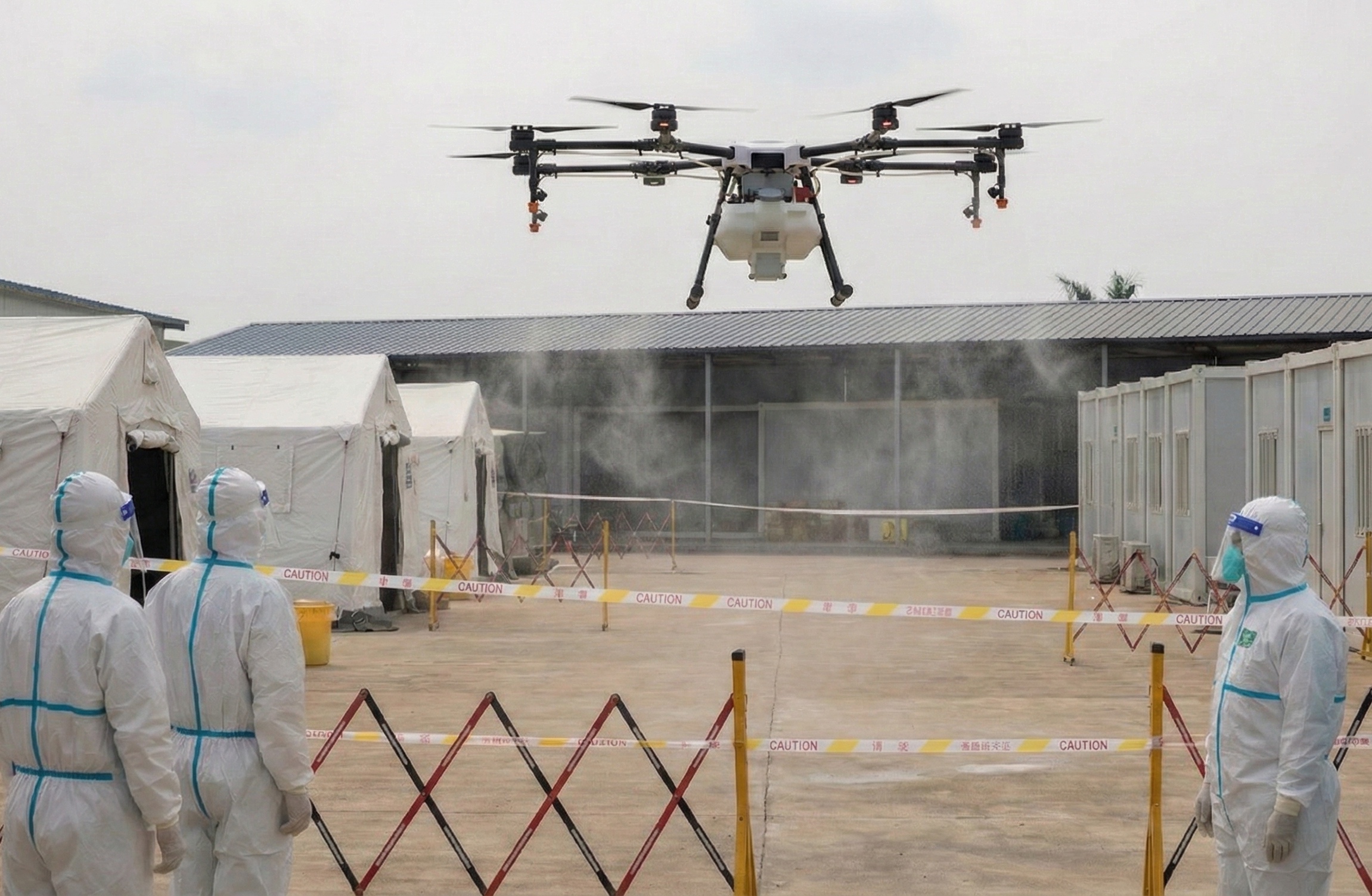
Spray disinfectants in public areas, heavily affected epidemic zones, or post-disaster locations to prevent the spread of pathogens.
Deliver emergency medicines, medical supplies, food, drinking water, and essential relief goods to areas isolated by natural disasters or conflict.
Provide accurate geospatial data (imagery, 3D models, environmental data) to update and enrich public health maps.
Ensure compliance with lockdown and quarantine regulations, preventing unnecessary movement in/out of affected areas.
Monitor vaccination sites in remote areas to ensure safe, orderly, and efficient operations, and track vaccine transportation.
3. Healthcare facility management and safety
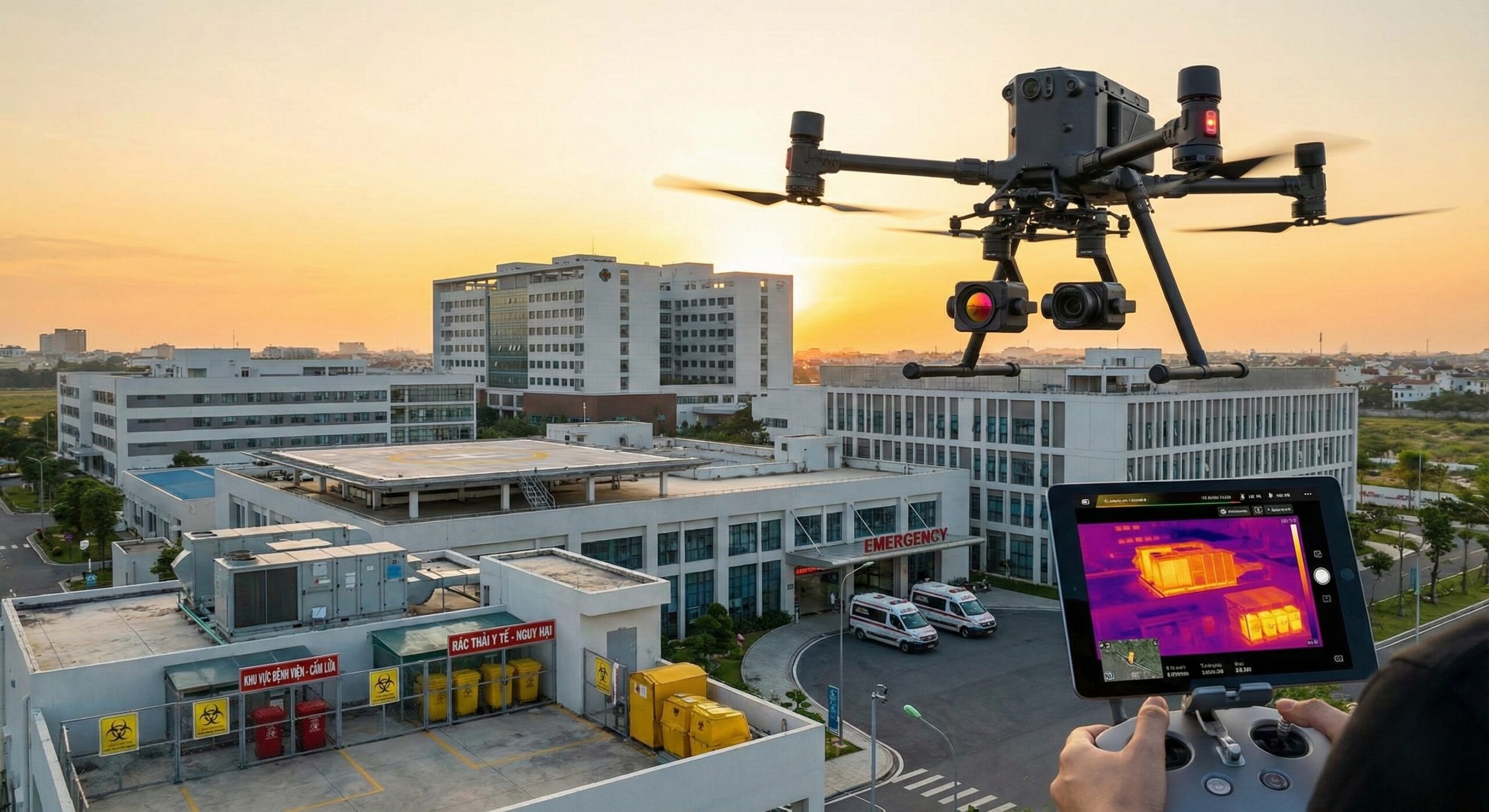
Spray disinfectants either broadly or locally in contaminated areas, quarantine zones, or high-risk infection areas.
Detect early signs of smoke, fire, or unusual heat spots in and around hospital buildings, especially in hard-to-access or high-risk areas such as warehouses and chemical storage facilities.
Monitor the layout, safety compliance, and overall condition of field hospitals, quarantine zones, or other temporary medical facilities.
Inspect and ensure that designated “medical safety corridors” remain clear, unobstructed, and secure for the transport of patients/medical supplies during emergencies (after storms, floods, or outbreaks).
Safely transport hazardous medical waste bags from dispersed locations (private clinics, temporary quarantine zones) to centralized collection or treatment sites.
Rapidly deliver large quantities of masks, protective gear, test kits, or other essential medical supplies to critical locations.
4. Medical Delivery & Emergency Transport
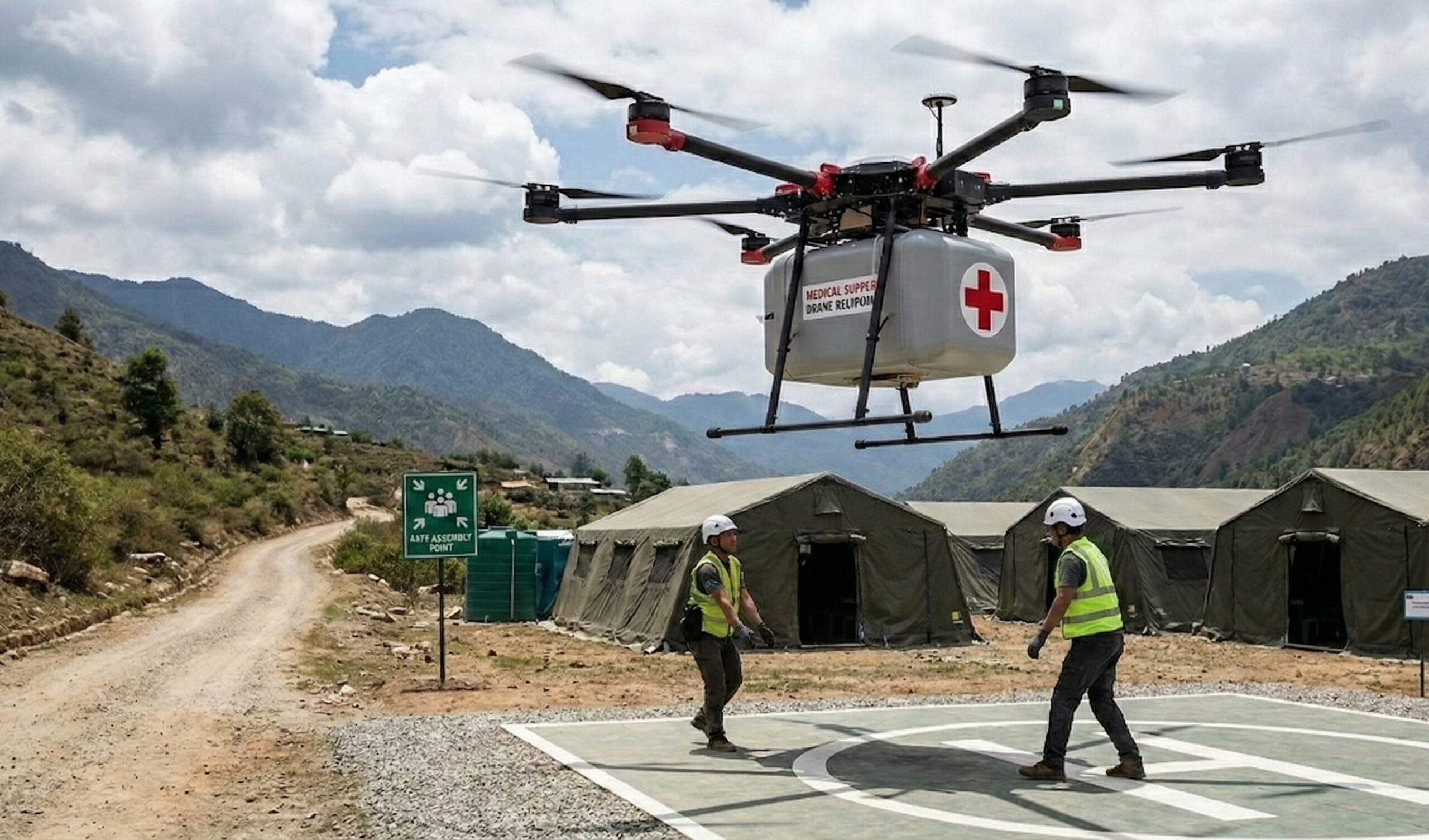
Inter-island emergency medical logistics.
Emergency medical supply.
Rapid delivery of critical medical devices such as automated external defibrillators (AEDs) to emergency sites (cardiac arrest cases) where every minute counts.
Delivery of common medicines, lab results, or non-temperature-sensitive medical supplies to clinics and remote areas.
Transport of temperature-controlled medical items such as vaccines, blood samples for analysis, or donated organs to ensure quality and integrity.
Emergency airlift of patients (one patient and one medical staff if required) from accident scenes to hospitals, especially in hard-to-reach or congested areas.
Provide aerial situational overview of disaster zones to help rescue teams plan and coordinate operations more effectively.
Deploy initial guide lines across obstacles (rivers, fast-flowing streams, ravines) to establish safety lines or temporary bridges for rescue teams.
Pharmacy-to-Home BVLOS operations in suburban areas (e-Rx delivery).
Rapid AED delivery to emergency sites.
5. On-site Emergency Medical Support
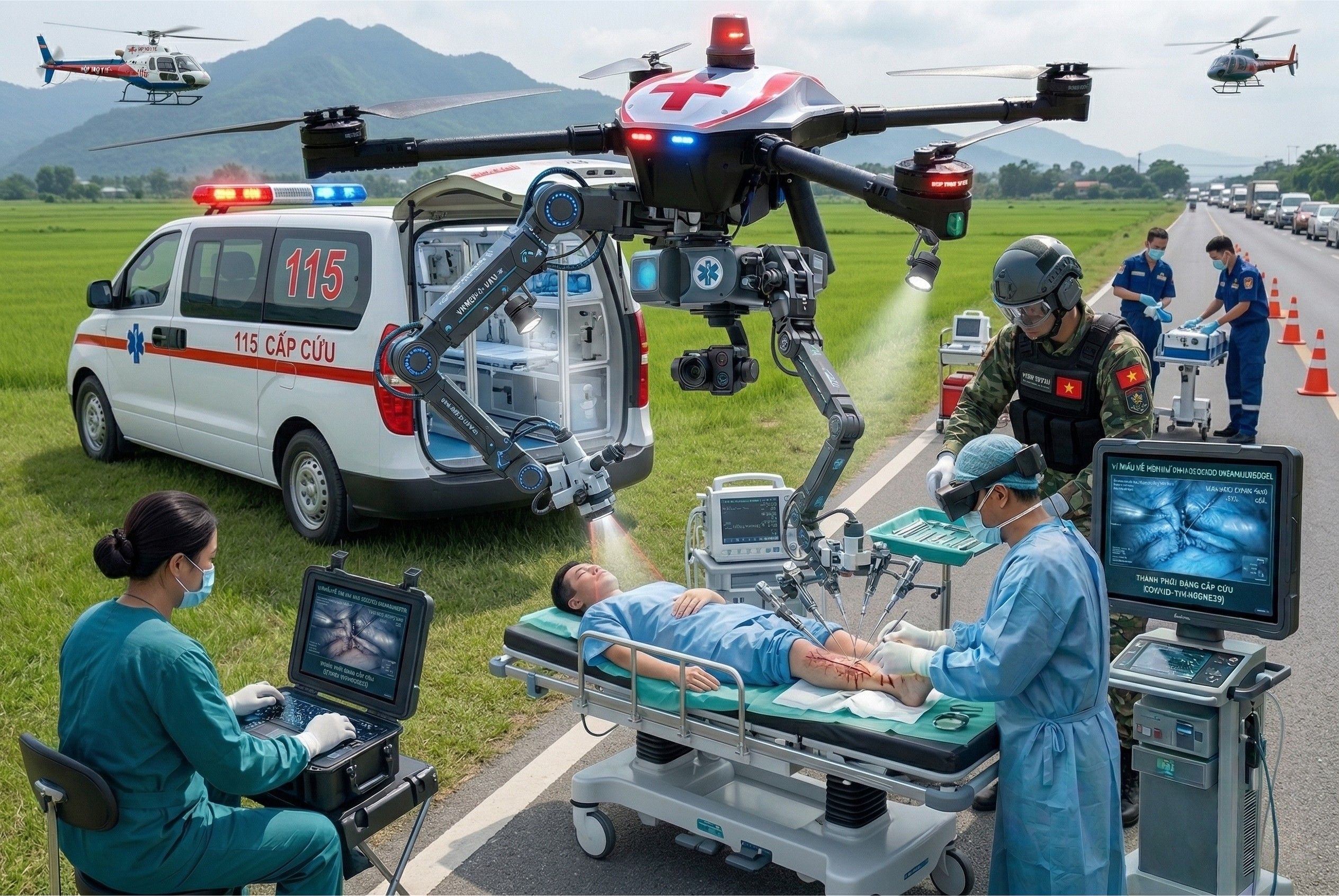
Prehospital micro-operation support.